Wednesday, 16 March 2016

Photography UNIT 57: Photos

These 20 photo's on this blog were taken in the courtyard of Jcoss School. We specifically had to take photo's and using different composition of the photographs, these included, leading lines, symmetry, focal points, rule of thirds and bird eye view. when i took these photo's is peciffically went out of my way to find compositions in the photographs that i was taking and for the majority of the photos i used rulwe of thirds.

I found it quite challenging when taking some shots to get exactly the right composition especially when taking pictures of the flowers and the leaves as they constantly got moved and rustled by the wind, but overall ie enjoyed it an i am looking forward to doing it again.

The Pictures in my opinion that are believe are the best photo's of the bunch are the ones that are highlighted in Purple, which is 5. I will talk you through why i consider these to be the best as they relate to the composition of photographs that are on my other blog post

1) The photo at the top left corner of the contact sheet is personally my favorite photo that i have taken because the focal point is clear in thta photo as the flower stands out in red among the green blurred background. the lighting also makes an impact on the flower as it reflects off one o the leaves

2) This photo i also highlighted as good, I did this because of the camera shot was seen as a bird eye's view, which is what i intended. The reason there is a leaf in a way is because i wanted to make the impression that the bird was seeing it from a tree and looking down at the floor.

3) This photo was taken in away to enhance the idea of leading lines as the brick wall is leading the eyes down a path and getting closer and closer to the ground.

4) the photo adjacent to it of another flower, this is also a good photo and similar to the first one. This is a photo of another flower but the focal point is the same as it's focusing on the leaves and the flower. The lighting is good as it bounces of the petals if you look closely and it is reflected in the drop of water that is on the leaf.

5) The final photo is of the tree's. this photo is goof in terms of symmetry because it is not obvious bu it is actually one multiple trees in line with each other but it looks like one tree with lots of branches which is the effect i wanted to get when taking the photo

In the future of the course I hope to use these skills that i learnt to take photos as well as the fact that i learnt naturally how to use the rule of thirds in order to take good photo whenever I take pictures. I also hope to use these compositions in the future of the course because i now know what is really effective whenever I take a photo and to look out for these whenever i'm walking around so i know when it's good to take a photo.

Monday, 14 March 2016

Magazine UNIT 51: Magazine Planning.

I have chosen to make a double page spread of a lifestyle magazine. This Lifestyle Magazine is aimed mainly at Teenage Girls between the ages of 13 and 17. 

These are my 3 ideas of the article will be:

1) An Interview between a former Disney channel star and why she left the business
2) A Q&A with a celebrity from Nickelodeon about joining a new show and how they feel about this
3) A Exclusive Feature in which 2 celebrities who are best friends talk about their friendship and how they are releasing a new album together

I have chosen to do Idea number 3 about the 2 celebrity friends.

I have decided to ask myself the following questions about how i am going to structure and plan the article:

Why Write the Article?
I have decided to write this article to inspire all teenage girls that read it that with your best friend anything is possible, I have decided to write this article specifically for teenage girls because i believe that they will find it interesting to find out how 2 singers launched their careers and how fame has kept these 2 girls together, this will hopefully inspire girls to still pursue their dreams of singing and with her best friend as well. The celebrities are called Krystal Snow and Tiffany Holiday. They are based on real celebrities

Who Will Read it?
This magazine is aimed at Teenage Girls globally from ages 13 - 17. The Magazine will be called "PreQueen"

Why Would They Do It?

The story is that Krystal and Tiffany have come in together to do discuss their new album that they are releasing called "poison Ivy" they will have an interview discussing their new album and also their friendship and how they go to where they were today. 

Planning The Article:

The Magazine is starting off about the album itself called "Poison Ivy"  and the songs on it. We will look specifically at the hit single called "Sisterhood" which is about 2 best friends and the friendship between them. This will lead onto the real life story of how Krystal and Tiffany met and became friends and now are releasing an Album together. We will talk about both of their separate careers before them merging into one.

This is my plan for the stand first: The Princesses of Pops are back! Krystal Snow and Tiffany Holiday are taking LA by storm promoting their NEW album “Poison Ivy” Talking Talia Wolf at
PreQueen Magazine HQ Through their new single and their old friendship.

I Plan to use 50 words on the headline, standfirst, and strapline.

The First 300 words will be about the album itself and how it came to being.The songs on it and the celebrities personal favourite

The next 200 words will be about the Celebrities hit single "Sisterhood" and the meaning it has.

The next 100 words will be a brief overview of Krystals career followed by 100 words about an overview of tiffany's career.


The last 200 words will be about how the girls met and instantly became best friends, unfortunetly one of the girls went on a 52 week world tour but they got back together a year ago and have been best friends ever since. They also have released a album together an dpapeared in each other music video

MY HEADLINE: 
Krystal AND Tiffany
 THE STORY BEHIND THE ALBUM


Saturday, 12 March 2016

Photography UNIT 57: Composition of Photogrpahs

Focal Points
  • Most pictures should have a point of interest
  • This is known as a focal point because it's what the viewer is drawn their attention to
  • Adds a sense of depth and helps construct the photograph
  • Their is usually only one focal point in a single photo
  • Focal Points sometimes gives a sense of realism and perspective
  • Does not be massive to do it's job
  • Colour can always help - a drop of bright colour will draw in attention
  • They create a lot of visual suspense
  • A picture doesn't always have to only one focal point - Two or more can produce an incredible images because the image will be confusing the viewer as they don't know which one ro specifically look at. 
Focal Point
Rule of Thirds

  • You use rule of thirds automatically in your mind 
  • Use the rule of thirds now that identifies 4 important parts of the image you should consider placing your point on interest
  • gives 4 lines that are useful elements from balancing your photo
  • Theory - if you place point if interest in the squares or on the lines, the photo becomes clearer and more balanced - they will be able to interact more naturally
  • Might be more natural for some people rather than others
  • when learning it - always ask yourself
  • What are the points of interest taking the shot?
  • Where am i intentionally placing them?
  • Keep the rule of thirds in your mind as you edit your photo later on.
Rule of Thirds
What makes a good photograph?
- Good Subject
- Good Lighting
- Good Composition

Don't 
- Take a Photo in the dark


Leading Lines

  • If a photo has strong lines in it, make sure they leave the eye into the frame rather than away from it


Viewpoint/ Angles
- Vary Angles - Shoot at different angles capture the subject and a different point of view, make the camera higher or lower than the average person would do. for dramatic enhancement,  Take some photos for birds eye or worms eye view

Lighting 
- Dramatic Lighting adds interest to a photo
Silhouettes - subjects make the dark photography it against a light background (back lighting)


Framing
- Framing a subject by zooming or moving closer draws attention to it


Symmetry
- An identical or near identical image of its other half. Use of symmetry often provides a formal balance


Task: We have to create a 20 image contact sheet
We can be  any style we want (portrait, Landscape)
They have to focus on one setting (location)

Wednesday, 9 March 2016

Photography UNIT 57: David Bailey Research

The following blog post is about the life and career of David Bailey in terms of how his work has been credited to the world of photography. I am aiming for this blog post to meet the Merit/ Distinction criteria,

David Bailey Backstory

David Bailey was born in Leytonstone, in East London. He was born on 2nd January 1938.  He was brought up in East Ham. He attended school but faced many problems academically because of his undiagnosed dyslexia and Dyspraxia, however from a young age he took a serious interest in photography which he developed from his love of natural history such as insects and nature. He attended a scholl that taught him "less than more basic council school".

He dropped out of school at 15 and worked as a copy boy on  Fleet Street for the famous Yokshire Post. |In 1956 at the age of 18, he joined the RAF and completed his service in Singapore for a year. following this he decided to pursue photography and bought a Rolliflex Camera. in 1958, he was determined to pursue photography and even bought a Canon Rangefinder Camera, He applied to the London College of printing but was turned down because of his bad school record. He then secured a job with David Ollis who was the main supplier of photo's for Queen Magazine. 1959, he became an assistant to John French in London, At the age of 22, he was already working as a freelance photographer for British Vogue.

This is when he created his most famous work and photographed all the celebrities that took the sixties by storm such as : The Beatles, Twiggy, Jean Shrimpton, The Rolling Stones, Micheal Caine, Peter Sellers  and many others. He also took the oppotunity to take photo's of the current fashion trends of that decade in both New York and London.

Since then he has directed many adverts and commercials, Taken part in many phtographic Exhibit which still promotes his work that he has done through the ages. He continues to take many photo's now of celebrities and is still considerd to be one of the most famous fashion photographers in the wxhb c  orld. even though he is 78 and still working.

Brick Lane, London, 1961
Examples of His work:
To the left and below, this an early example of David baileys work, this a picture taken in East End of London. These are the photo's that bailey first took with his Rolliflex Camera. His main aim was to show the real life of how people lived in he east end that type. The Picture of Brick Lane is extremely interesting because it shows the bad sign of London that nobody imgined or heard of. The Women is standing to his back to the camera as if to shield herself from life hat was really like,


The Picture below is hwat i believe to be a bad example of his work, This only what i consider in my opinio a the picture doesn't reallly ehibit what life was really like at that point. In my opinion the photo looks stage and although it is trying to get a message across between the rich and the poor, I find it confusing to understand as the picture is abckwards. It also shows him taking the photo which ruins the photo in a way and takes the real message away from the picture.
One of Bailey's Earlist Pictures

Techniques

David Bailey has claimed never to use "zoom" in his like, despite the majority of pictures being of people's face and shoulders. David Bailey takes more than just a picture. He takes the photo of the personality that the person has and does not make them pose but rather have the photo taken when people are in their natural state. he claims his main technique is to meet the person, actually get to know them over the course of roughly an hour and a half. over a coffee or a meal. After this he only spends 5 minutes taking the actual photos. because that's what he wants to see and that''s the side that they should be shoeing the world.
Iconic Picture of Audrey Hepburn with her Iconic Makeup. David Bailey claims to have never uses zoom in his life.


Equipment
David Baileys Attitude towards equipment is quite interesting he says, that you don't need a camera to take a good picture. The Camera is only a object which takes and process the image. The real magic is in the photographer himself. anyone can use a camera. Anyone can be a photographer. David Bailey Even said "I knew how to take a picture before i knew what a camera was".

David Bailey's Pentax, he took lot's of iconic photo's with it.

Locations:
David Bailey has a Photography studio in central London in Bloomsbury. This is where all the potrait have been taken and have been since the 1960's. He does take photography out of the studio though, he likes to visit east end .
Haitian Fashion
London and take photography there as it is where he grew up and it's engaging to see how the same area has changed through the decades. In the 1970's on a mjaor assignment for Vogue he photographed fashion across against the foundations of the mountains that were in inner Turkey. He continued to travel the world taking photo of the different fashion trends of that decade and compare to different countries. such as: India, Peru, Japan, Haiti, Brazil , Papaua New Guinea, East Africa, Australia, Delhi and the Naga Hills.

Exhibitions:

David Bailey has presented his work in many different ways. Recently he had an exhibition in September 2015, Called Stardust. This was at the National Portrait Gallery in London, This was an entire collection of his work from career that spans through to the decades up to 2015, The exhibition was split into different rooms that focused on different countries where bailey had visited such as the ones noted above. it featured over 250 images. Bailey's contribution to Vogue was also incorporated in an exhibition also at the NPG which is"100 Years of Vogue". His work is also included. He has exhibited his work in movies and TV S which feature his work. He has worked on documentaries, such as "we'll take Manhattan" which featured jean shrimpton and the 1962 photo shoot. He has taken part in many photographic charitable benefits.

Style:
David Bailey claims he has no style of taking a photo's as in camera angles, however mainly takes photo's of famous people and the personality behind their facade, he also tends to focus on fashion and how it changes through the ages, as he has exhibited through his many many photo's. However it is clear that David uses Black and White in the majority of the photo's that he takes. This is because he quotes that "Black and white gives the message immediately."

During an Interview with David Bailey and Andrew Graham - Dixon, they discussed this photo (below) How if the photo was taken in colour that admirer would have been distracted by the "redness of his lips" or ""the veins in  his eyes" and the photograph would not have been as effective.The Background is said to have been awful as well as David Bailey said in the interview so the Black and White filter changes that and makes it more mystical.

Francis Bacon 1983
Influences:

David Bailey is said to be Influenced by Pablo Picasso. at age 17, He learnt from Picasso's artwork that art didn't have to be just painting and that "a wheel didn't have to be round it could be anything". He quoted this an interview.  He was also influenced by pictures he saw in a magazine by Bronzino. He is said that's when he wanted to become a fashion photographer based on the pictures he saw and realised that he could do anything. David Bailey is alos said to be influenced by cinema. He said that the Hollywood industry motivated him as well as the French New Wave. Godard's Breathless really inspired bailey with the way that he took photo's and a second later, they were an instant memory. Like William Klein, He likes taking photo's of streets or on a white backroung as they are the most demanding photo's tha one can take.

David Bailey was Influenced by the cinema: He quotes: "The only cultural input was Hollywood. My whole cultural influence is really Hollywood—old Hollywood, ’40s Hollywood. We’d go to the cinema seven times a week; it was cheaper than staying home because you didn’t have to put money into the gas machine that kept the fires going in the house. I think when I was around 12 my heroes were Fred Astaire, John Huston, and an ornithologist named James Fisher. I thought Fred Astaire was the most glamorous thing in the world. And I thought John Huston was like a white hunter."

His Heroes are also: Penn, Avedon, Huston, Fellini as well as various others.He continues to be an inspiration to many aspiring photographers around the globe.

Further Examples of David Bailey's Work:

Will Smith

This is in my opinion, is a good example of David Baileys Work.Will Smith was bullied when he was a young boy for have ars that were larger than average. Will has mentioned this several times. Bailey asked Will to use this to his advantage, Will only has light on half of his face, this gives the impression that one of ears are pinned back. This has been specifically done to bring out will's comedic values as well as to show the sensitive sign of him simultaneously. Bailey does not use props of exttra lighting to stage the photo but rather focuses on the individual and his backstory. In this case, this comes through and i would consider that to be a successful photograph.


This in my opinion is a bad example of David's beailey's work. The picture has been taken in a beautiful way but the flmaingo is not natural and not relevant to the picture and does not define this model in any way. The picture doesn't define the decades or anything or the sort of life. 

Thursday, 3 March 2016

Photography UNIT 57: Photojournalism


In Class today we looked at a documentary featuring the life and career of Don McCullin who is a British Photographer.  He took photo's that represented what the real issues there were in world in the 1960's - 70's. Based on the documentary that we watched I am going to answer the following questions.


Here is the link:
https://www.youtube.com/watch?v=ILB2ALJbd6c 


Why is Photojournalism Important?


The Google Definition of Photojournalism is "
the practice of communicating news by photographs, especially in magazines." This is what Don McCullin does. He gets real life issues across the wroeld through photo's and therefore he showcases the truth from a first hand perspective. Photojournalism is important in terms of telling the truth, because unless they have been photo shopped or taken in a biased way. they don't lie. even more so, testimonies can back them up. They also help summarise what is written in an article and make you understand what you didn't before because it is taken from a point of view of someone who was there and can vouch for the truth.


Positives of Photojournalism?

Looking at Don Mcullin and his career I can take out some of the positives of a career in photography and mainly in photojournalism.

  •  Can get paid a lot of money to do something you love as i can see from Don McCullin as he is wealthy and is known for taking photo's of things, which  he loves.
  • Can talk & show the entire world the real issues that the planet is facing
  • Show how times have changed through the years and decades and compare to what life was like before and now with real photographic evidence.
  • Talk about pictures about famous historical events which you  can relate to because the photojournalist was there.
  • Get a rush from taking the photo's.
  • Witness Events
  • Travel around the globe
  • Record Reactions through pictures
  • Relive Memories
  • Show the real truth

Negatives of Photojournalism?

Tuesday, 1 March 2016

Magazine UNIT 51: Audience Profiling and Double Page Spread analysis

This is a Stereotypical Audience Profile for people who would read NME Magazine.

Who mainly listens to that music: People who like to keep up to date with a particular artist or band that they like the music of and who are well educated fans in this area of music

Gender: Male

Age: 17 - 30

Social Class: Middle Class

Ethnicity: White British

Interests: Likes going to concerts of high profile bands, playing an instrument, likely to be piano or guitar , owns a music playing device such as an Ipod or an MP3 Player. Is actively on social media such as Twitter and Facebook.

Dress Sense: Jeans (maybe ripped) , White Shirt, Loose Tie, Converse Shoes, Leather Jacket and sunglasses

Why They Listen to Pop Music: They Listen to music so they can keep in fashion  with the trends of the 21st century. They also hope to aspire to be like this person that plays the song and it gives tehm hope to pursue this one day.


How Often  do they listen to their Music: At least twice a day. On the way to and from work or school. They might occasionally listen to music while working or running for recreation

What they would like in magazines: They would want to know the life of the artists/band rather tahn just the music they make and how they started off their careers and how they live their life besides their music career such as hobbies, relationships and other activities.

What was the task?

The task was to analyse a double page spread that we had chosen and to use all the key terms and do an in depth assessment of a particular Double - page spread. I chose to do an anlysis of a double page spread of an interview with Nicki Minaj as you can see above.


What I Learnt?

I Learnt about the clever tricks that magazine articles use to entice the reader into reading and entire article, such as using the colour pink, in order to promote Nicki's new album "Pink Friday". The fact that they also layed out the article as a way of comparing Nikki Minaj - a Pop Singer to a godly figure. This entire Article is set out as it would be in the bible, all the way up to using biblical texts and phrases. Techniques that i picked up on when reading this article was the fact that the main picture is placed to a point where all the text surrounds her, much like people surround  a god with worship. The Picture itself was also black and white, however this would help me a pick a colour scheme in the future based on the picture because i might have trouble deciding.


In the future?

This will help me in the future. I can use these methods that i picked up on in the article, in my own double page spread so that i can too, use these techniques to entice the reader into reading my article and finding it incredible interesting.

Wednesday, 24 February 2016

Photography UNIT 57: History and My Relationship

Photography is a word that has derived from the Greek words Photo and Graphein ( Light and Draw) This word first came about in 1839 by Scientist by John F.W.Herschel. He first used this word when explaining to colleagues the  camera which defines even today as a device which records images using or the action of light, or radiation on a sensitive material.

We will Look at now at the development of camera's and photography in general throughout the ages:

History of the Photography Process

Pinhole Camera:

This came around about 1000AD, This however, due to low technology, the picture taken was shown as upside down.


First Photo Ever Taken, 1827
The First Picture:
In 1827, This was the first photo ever taken via a pinhole camera (Camera Obscure)  by Joseph Nicephore Niepce, however before this, people mainly used camera obscura to trace or draw photo's. furthermore in France, Louis Daguerre was trying to find  a way
to capture an image. but only found away to keep the image for around half an hour before it disappeared. in 1829, he partnered up with Niepiece in effort to improve the process. in 1839, after several years of experimenting and Niepiece's demise, Daguerre developed an efficient and convenient way to take photos'. He named it the Daguerreotype.
The Daguerreotype Process.


Camera Obscura


Negative to Positive Process

Henry Talbot Invented the first negative form of photography with Positive pieces in it in 1841, .  He called it Calotype (greek for beautiful picture)


First Picture created by Calotype


Tintypes
These were patented in 1856, by Hamilton Smith This turned pictures from negative in positive images.

Wet Plate Negatives:
Frederick Scott Archer invented theses in 1851, he used this method to make the photo taken more detailed and clearer to see. this method involved carrying a darkroom around making it portable.

 Dry Plate Negatives and Hand Held Cameras:

The Dry plate negative process was invented in 1879, and was easier to use rather than wet plate method. This also meant that the photo's could be stored for a while. Portable Darkrooms no longer had to be used and could hire technicians to develop their photo's. This process made a break through with camera's because this process absorbed light quickly to the point where hand held camera's could start to be manufactured.

Flexible Film:

This was invented in 1889, by George Eastman. this meant film could be put in that was flexible, could be rolled and unbreakable. This meant that the box camera can be now massed produced.
Box Camera
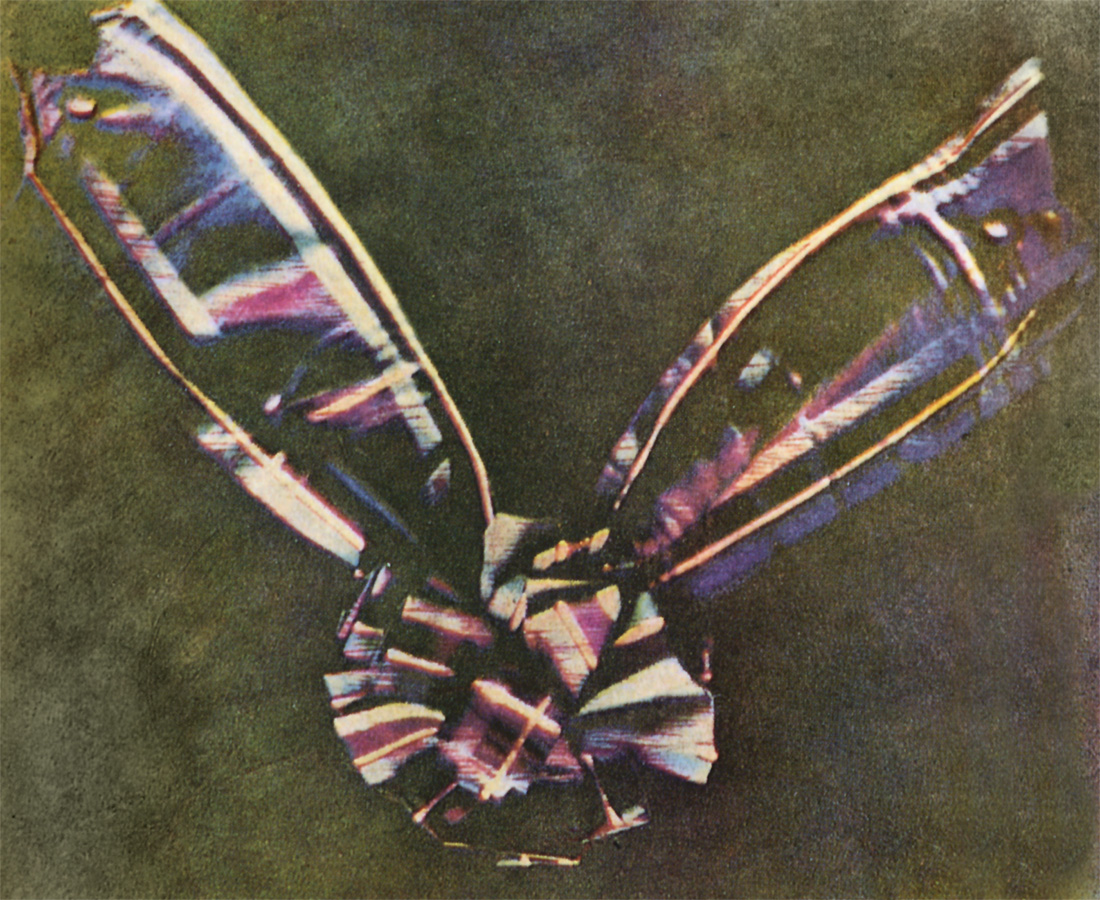
Colour photographs

These appeared in the erly 1940's. when colour films were brought to the market.

First Ever colour Photograph was taken by Thomas Sutton in 1861.
Photographic Films

The First flexible film roles date back to 1899, it was made out of nitrate. this is important because it allowed the development of roll films. The first flexible movie films measured 35-mm wide and came in long rolls on a spool.
This Technology continued in the 1920'was when this film roll was developed specifically for camera's. by late 1920's, they switched over to medium - format film roll was created. It measured six centimeters wide and had a paper backing making it easy to handle in daylight. This led to the development of the twin-lens-reflex camera in 1929. Nitrate film roll also stopped the need to use fragile glass plates.

Triacetate film came later and was sturdier, stronger and fireproof. moist films' s until about the 1670's used this technology.

Photographic Prints

It used to be the case that linen rag papers were used to make the base for these photographic prints, however, when gelatin emulsion was added, the photo's became stable. previously they would crack and dry out.

Due to the high humidity, parts or the whole image would have been lost. however, the photographic fixer left chemical residue. chemicals in the water that was used fro developing the images caused damage. If the print is not washed completely to remove all bits of the fixer than the picture would have been discoloured and images would have been loss.

Water - Resistant paper  was the next innovation in photographic printing. The only issue with this would have been the image that the resin would have relied on produces a plastic coating and there would be the off chance of fading.

Colour |Prints previously weren't stable to show because of the organic dyes. these dyes would deteriorate and therefore the image would literally disappear from the film or paper. Kodachrome was invented around the 1930's and it was the first film to produce colours that could last  50 years.

New Techniques have arisen as we are in the 21st century and we can now produce paintings that can last at least 200 years and that are therefore permanent. We now use computers to print images and a highly stable colours. the colour we now use are permanent.

History of the Camera

As we know the first camera that was ever invented was the Pin hole camera, as previously mentioned.

However in 1600, it was reinvented by Della Porta. who was also the first European to publish any infomation on the pinhole camera and is therefore incorrectly credited with its original discovery.

Daguerreotype Cameras
These were camera's that were made in the daguerreotype process.

Daguerreotype Camera
Box Camera

George Eastman invented the Kodak Camera, in 1888. It had about enough film for 100 flip shots. The original paper film was then changed into plastic base because of the success of this camera.

Original Box Camera, 1888
Flashlight Powder

Flashlight Powder was invented in Germany in 1887, by Adolf Miethe and Johannes Gaedcke. Flashlight Powder was used in lamps when taking flash photography.

Flashbulbs

These are used to take pictures using flash. They were invented by Pail Vierkotter. in 1930, These became commercially available.

Filters

These were founded by Frederick Wratten. He made these into a photographic manufacturing business in 1878 Called Wratten and Wainwright. Wrattern along with Dr C.E Kenneth Mees (E.C.K Mees) invented and panchromatic plates in England in 1906. Wrattern is known for these filters that he invented and names them after him - Wratten Filters. Eastman Kodak bought the rights to these in 1912.

35mm Cameras

in 1905, Oskar Barnack had the idea to reducing the format of film negatives and enlarging the photographs following their exposure. As development manager at Leica, he was able to put his theory into practice. He took an instrument for taking exposure samples for cinema film and turned it into the world's first 35 mm camera: the 'Ur-Leica'.

Polaroid or Instant Photos

Poloroid Camera, 1948.
These were invented by Edwin Herbert Land. He was an Inventor and physicist whose one step process for printing and development created instant photography, The first Polaroid camera was to the public in November 1948.

Disposable Camera

Fuji introduced disposable camera's
in 1986.  They were known as single use camera's.
Disposable Camera, 1986

Digital Camera

Digital Camera,. 1986
in 1984, Canon demonstarted the world's first digital electronic still camera.


My Relationship

My Relationship with photography has varied over the years, because as digital technology as have i but as i am now 17, i use photography in my every day life.

When i was about 5, i used to hate camera's the the extent that i ruined 3 of my father's £200 Digital Camera's by putting them in the washing machine. for about 5 years after this, i wan't allowed to touch a camera, However, when it comes to being in photo's i very much  like to be in the photo, rather than taking it in general. I also prefer being in photo's in family an friends.

However, every 2 years in my family we go to a photography studio to take pictures all together which i thoroughly enjoy because it shows how we have grown up over the years, doing this every 2 years have really helped me grown to like photo's and generally pose in general.

In Year 9, At my previous school, i took up photography enrichment which i actually didn't enjoy because it wasn't taken as seriously as on might have hoped as we just went around school bi - monthly for an hour taking pictures on our smartphones of randoms meaningless items around the school which wasn't fulfilling at all. Although it did teach me what angles to take certain things at depending on what smartphone or camera I was using. This would help me in the future when taking selfies became trendy. The Following photo's, i took on a blackberry curve so please excuse the quality.
Photo's That I Took During my Photography Course


I would also like to mention that when it comes to relevance in terms of social media, i am fairly
involved, i see photo's across my every day life on Facebook. but i am more involved when it comes to Instagram and Snapchat which are both photography based apps. i use at least 3 times a day, or even more i  am bored. I post on Instagram a photo or video at least every 3 weeks and i post on snap chat an healthy amount of at least once a week, these are mostly pictures of my current activity and it is usually babysitting.


I actually was exempt from photography for about 2 years from about 2013 - 2015 because of the phone i had. I had  a Samsung  galaxy S4 Zoom which is a great camera phone but 3 months into my cocntract my back camera broke and i couldn't get it fixed. it made taking photo's difficult on a front camera and i found too difficult to take photo's so i just stopped for this period of time.


I would also like to add that i recently visited a photographic exhibition at the National Portrait Gallery. This exhibition was about teh Magazine "Vogue" Through the ages and how it got to where it was today from 1916 - 2016. I found it incredibly interesting at how fashion has also gone through the ages and it was an enjoyable trip.


Finally, My Relationship with photography has actually extended into my every day life. I take selfies every so often with friends and family, as i previously mentioned that i do use my phone and social media on a daily basis and i look at other people's photo's more than my own, I also prefer taking photo's of people rather than abstract pictures. Because i like recording reasons and taking pictures of people who are natural and caught in te moment rather than posed or touched up.